For US entrepreneurship faculty
Lisbon · Rome · London · Summer 2027
In three weeks, your students build a startup.
Choose Lisbon, Rome or London. Students earn 3 US credits, and you lead the academics.
- Same price in all three cities



- 8 to 10 hours a day on site
- Students from 65+ countries
- 50+ mentors from NVIDIA, Google and Amazon
- $100K investment prizes across 3 programs
Conditions applyFinish EIA Ventures, incorporate, get a 1:1 co-investor.
Locations
Three cities, one course
Same course, credit and price. Pick the dates and format that suit your students.
 Portugal
Lisbon
July 19 – August 6, 2027
3 weeks on site
- On site
- On site: July 19 – August 6, 2027
- Online pre-week July 12–16, 2027
- 300 students · Co-organized with University of Lisbon
- Italy
Rome
July 19 – August 6, 2027
2 weeks on site, 1 online
- On site
- On site: July 19–30, 2027
- Online
- Online: August 2–6, 2027
- Online pre-week July 12–16, 2027
- 200 students · Co-organized with Università Campus Bio-Medico di Roma
- United Kingdom
London
July 12–30, 2027
1 week on site, 2 online
- On site
- On site: July 12–16, 2027
- Online
- Online: July 19–30, 2027
- Online pre-week July 5–9, 2027
- 200 students · Co-organized with Bayes Business School
Faculty already do this
Your peers already bring students.
Faculty from these US universities have taken students to EIA.






So have Virginia Commonwealth, Washington University in St. Louis, Iona, Grand Valley State, SUNY Cortland, Shippensburg and Western Washington. Your students team up with students from the University of Lisbon, City St George's, University of London and Sapienza in Rome.
What US faculty say
It mimics the exact process an actual entrepreneur would go through.
 Ken SingerUC Berkeley
My students came home able to defend every decision they made. You can't manufacture that in a classroom.
 Dr. Harold WrightUniversity of Alabama
Real customers and a real deadline taught them judgment no case study can reach.
 Dr. Maher HakimCarnegie Mellon University
$10K
Future Skills Grant
$10K to research the skills AI can't replace. Bring 20 students, publish the study and become a Future Skills Fellow.
The course
Students learn by building a startup
Each team takes one idea to a tested product and pitches it to investors. The course is graded and carries credit.
- Build
One venture per team
About 80 ventures come out of the Lisbon cohort alone.
- Learn
Daily mentoring
From people who have shipped at NVIDIA, Google, Amazon and Visa.
- Assess
Graded, with credit
Dated syllabus, contact hours and rubrics. You grade your students.
Students from 65+ countries, working in one room.
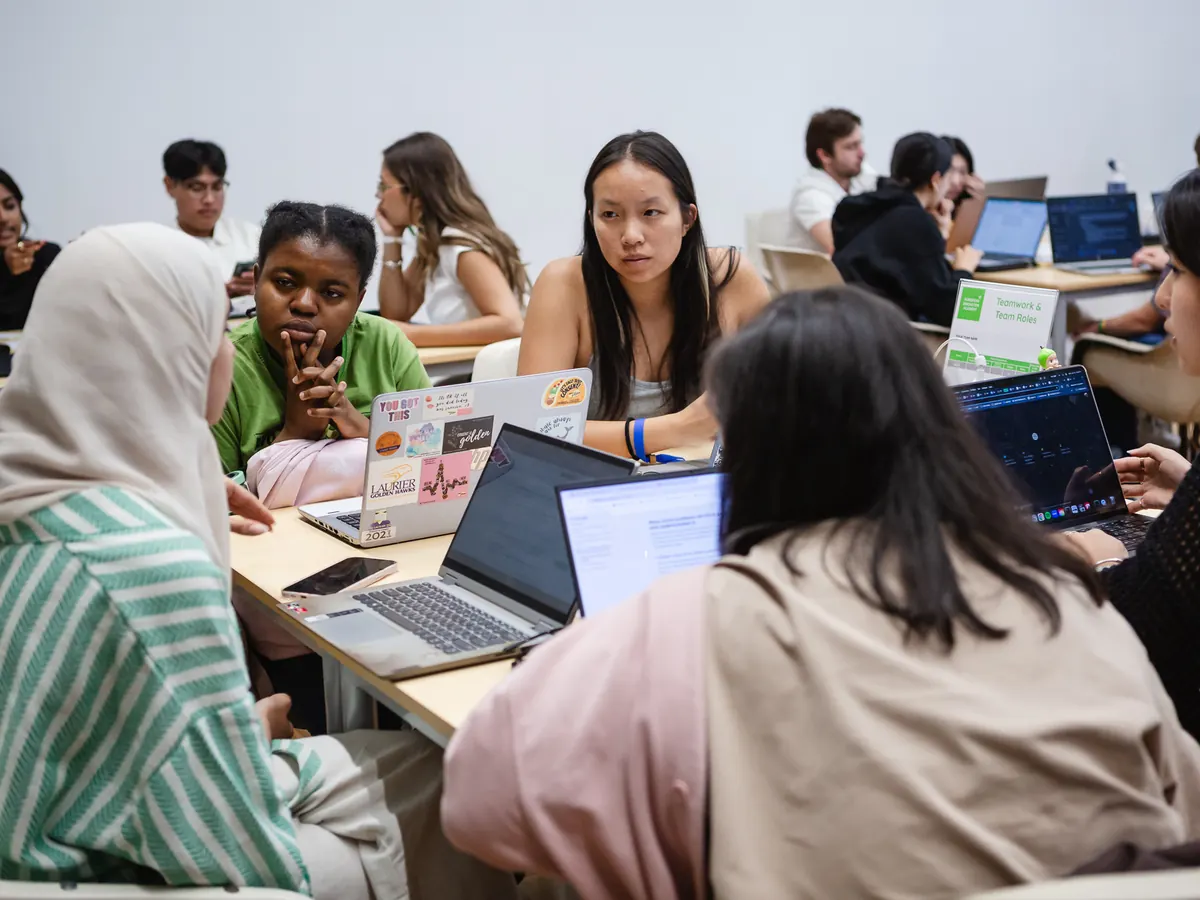
Every table is a founding team. 
Students question speakers from the floor. 
The whole cohort celebrates milestones together.
What alumni do next
- 40%
- of alumni become founders
- 64%
- of ventures started at EIA survive
- 44%
- credit EIA with a job or promotion
- $2.2B
- raised by alumni ventures
EIA alumni outcomes since 2012.

Your cohort, inside a global one
You lead and grade your students. They work in mixed teams with students from 65+ countries, which they can't get on campus.
Who teaches alongside you
EIA Faculty
Operators, founders and investors mentor the teams every day. You keep the grading.
Showing 8 of 51 mentors
 Strategy & business
 Marketing & growth
 Marketing & growth
 Marketing & growth
 Product, tech & design
 Strategy & business
 Product, tech & design
 Strategy & business
 Strategy & business
 Strategy & business
 Strategy & business
Gabriela Martinez Altamirano
Project Manager · Head of Mentors
EIA
Ask about Gabriela Martinez Altamirano Strategy & business
 Strategy & business
 Strategy & business
 Strategy & business
 Strategy & business
 Strategy & business
 Strategy & business
 Product, tech & design
 Product, tech & design
 Product, tech & design
 Product, tech & design
 Product, tech & design
 Product, tech & design
 Product, tech & design
 Product, tech & design
 Product, tech & design
 Product, tech & design
 Product, tech & design
 Product, tech & design
 Marketing & growth
 Marketing & growth
 Marketing & growth
Claudia Adreani
Founder & Strategic Marketing Leader
Belly Slide · ex-AstraZeneca
Ask about Claudia Adreani Marketing & growth
 Marketing & growth
 Marketing & growth
 Marketing & growth
 Marketing & growth
 Marketing & growth
 Marketing & growth
 Marketing & growth
 Pitch
Pitch Pitch
Pitch Pitch
Pitch Pitch
Pitch Investors
 Investors
 Investors
 Investors
 Investors
 Investors
Want mentors matched to your syllabus?
Tell us your course focus and we'll introduce the right mentors on the fit call.
Current EIA mentor pool. Each city's 2027 line-up is confirmed on a rolling basis.
Startups from EIA
The network your students join.
 WiseEIA 2013 · 2015 · 2016$12B valuation
 BoltEIA 2012$7.6B valuation
 The Farmer's Dog$3B valuation
 GrabCADEIA 2014 · NiceAcquired
 Scoro$30M raised
 HydroSolidEIA 2025
 HighstokeEIA 2020
 BS-AIEIA 2018
- Your students' startupSummer 2027
Ready to talk?
A 30-minute call about your students and your approval timeline.
Early bird pricing holds until December 31, 2026.
United States
Built for US approval
What your chair will ask about.
3 US credits
Syllabus, contact hours and rubrics included. Your registrar confirms.
Fits the summer session
All three run between July 12 – August 6, 2027. Home well before fall.
No visa needed
US passports need no visa for Portugal, Italy or the UK. We confirm ETIAS and UK ETA rules per cohort.
Billed in USD
Purchase orders accepted. The grant is paid in USD.
You lead. We run the course.
EIA brings
- Curriculum, venue and daily delivery in each city
- 50+ mentors and investors
- Pitch night: $100K investment prizes across 3 programs
- A planning pack for your department and risk office
Conditions applyFinish EIA Ventures, incorporate, get a 1:1 co-investor.
You keep
- Academic authority and grading
- How the credit appears on transcripts
- Your teaching role, as big as you like
- Your students and your duty of care
For your curriculum committee
What your committee needs
Credit and contact hours
- 3 US semester credit hours is the usual mapping. Your registrar decides.
- 8 to 10 contact hours a day on site, plus an online pre-week.
- Each city's course is co-organized with a local university.
Learning outcomes
- 1Test a venture idea with real customer interviews.
- 2Evaluate a business model and its assumptions.
- 3Design an experiment and act on the result.
- 4Pitch a venture clearly.
Pitches are graded as communication. You sign off on grades.
The schedule
Week by week
The weeks are the same everywhere. Only on site and online differ by city.
- 0
Pre-week
Form teams
Students pitch ideas online and find co-founders.
- LisbonOnline
- RomeOnline
- LondonOnline
- 1
Week 1
Build the MVP
Customer interviews, then a prototype in front of users.
- LisbonOn site
- RomeOn site
- LondonOn site
- 2
Week 2
Go to market
Live campaigns with a real budget.
- LisbonOn site
- RomeOn site
- LondonOnline
- 3
Conditions applyFinish EIA Ventures, incorporate, get a 1:1 co-investor.
Facts and fees
Course facts
Summer 2027, all three cities
- Cities
- Lisbon, Rome or London
- Dates
- July 12 – August 6, 2027, by city
- Length
- 3 weeks, plus an online pre-week
- Hours
- 8 to 10 a day on site
- Credit
- 3 US semester credit hours (usual mapping)
- Cohort
- 300 in Lisbon, 200 in Rome, 200 in London
- Open to
- Students of any major
- Visa
- None for US passports
- Billing
- USD, purchase orders accepted
- $10,000 to the faculty researcher at 20+ students
- Accessibility
- Written support plan per cohort
Conditions applyFinish EIA Ventures, incorporate, get a 1:1 co-investor.
Tuition per studentSeats limited
First seats
Closed$1,835
Until September 30, 2026
Early bird
Open now$2,159
Until December 31, 2026
Regular
$2,483
Until April 30, 2027
Final call
$2,699
Until June 15, 2027
Same price in Lisbon, Rome and London. Includes the full course, credit and daily mentoring. Your final price is quoted in USD, in writing.
ROI calculator
What a cohort returns
Move the slider to your cohort size. Each extra student raises the return per dollar.
Current fee. Change it if you have a quote.
15.2x
5-year return
20 students
Includes the $10,000 Future Skills Grant
20 students at $2,159 cost $43,180 and return $657,700 over five years.
- Tuition revenue lift
- $539,750
- over 5 years
- Enrollment increase
- +21%
- over 5 years
- Ranking lift
- +12 positions
- employability factor
- Media & brand value
- $107,950
- over 5 years
- Future Skills Grant
- $10,000 to you
- Paid to you for the article and skill entries.
EIA replies within one business day.
How this is calculated
Every coefficient, for your finance office.
- Investment is tuition times the number of students.
- All figures are set at a 20-student cohort, then scaled by (ln n / ln 20) to the power 1.5 for dollar values and 1.2 for enrollment and ranking.
- At 20 students, tuition revenue lift is 12.5 times the investment and media value is 2.5 times.
- At 20 students, enrollment rises 21% and ranking 12 positions.
- The $10,000 Future Skills Grant counts from 20 students.
- The default $2,159 is the current fee. Get a written quote before budgeting.
- Based on EIA alumni outcomes since 2012. Results vary.
Modeled projections, not a guarantee.
Next steps
From first call to confirmed cohort
- 1
You get in touch
A partnerships lead replies within one business day.
- 2
Fit call
30 minutes. No slides.
- 3
Plan and quote
Syllabus, grant terms and a written quote.
- 4
Internal review
We answer your committees directly, W-9 included.
- 5
Agreement
Terms signed, seats held.
US academic calendar
Plan around the deadlines
- Prices rise on December 31, 2026 and April 30, 2027.
- Start approval in fall 2026 for summer 2027.
US faculty inquiries
Discuss a cohort
Discussing a 20-student cohortFuture Skills Grant unlocked
Leave your name and email. We reply within one business day.
- No obligation.
- Calls in US business hours.
Faculty questions
How many credits do students earn?
Usually 3 US semester credit hours. Your registrar decides, and we send the syllabus, contact hours and rubrics they need.
Which city should we choose?
Lisbon is fully on site. Rome is two weeks on site, then one online. London is one week on site, then two online, and finishes first. Credit and price are the same.
How does the Future Skills Grant work?
Lead a cohort of 20+ students and send a 1–2 page proposal on one future skill. We pay you $10,000: half when data collection is done, half when you submit your article and Atlas entries.
Do I have to teach?
No. Teach and mentor if you like, or focus on grading your own students.
Is three weeks enough?
It is enough to find a customer, build, test and pitch to investors. That loop is what we assess.
What does it cost?
$2,159 to $2,699 per student, depending on when you book. Billed in USD, and purchase orders are accepted.
Do students need a visa?
Not with a US passport, in any of the three countries. Safety, insurance and support terms are written down per cohort for your risk office.
Can we talk to a US university that has done this?
Yes. Faculty at Alabama and Carnegie Mellon have worked with EIA for over ten years. Ask on the fit call.
I'm a student. Can I attend?
Yes. Ask your professor to contact us, or email info@inacademy.eu.